New Pune
Warehousing and cold-chain around an airport can out-earn residential land.
Everyone knows Pune needs a second airport. But very few understand what an airport actually creates around it.
Airports are not just places where aircraft take off and land. They become powerful economic engines that attract industries, infrastructure, businesses, and thousands of jobs.
For investors, understanding this transformation is often more valuable than simply buying land near an airport.
Why Airports Transform Regions
A modern international airport creates demand far beyond aviation.
Once an airport begins operations, several supporting industries start developing around it:
- Warehousing and logistics
- Hotels and hospitality
- Cargo terminals
- Office spaces
- Retail developments
- Residential townships
- Industrial parks
This ecosystem continues to expand for years, creating long-term demand for land and infrastructure.
Infrastructure Comes First
One of the biggest mistakes investors make is waiting until an airport becomes operational.
In reality, land appreciation often begins much earlier because governments first invest in supporting infrastructure such as:
- New highways
- Ring roads
- Railway connectivity
- Water and power infrastructure
- Industrial corridors
As connectivity improves, businesses gain confidence, developers enter the market, and land demand gradually increases.
Why Purandar Matters
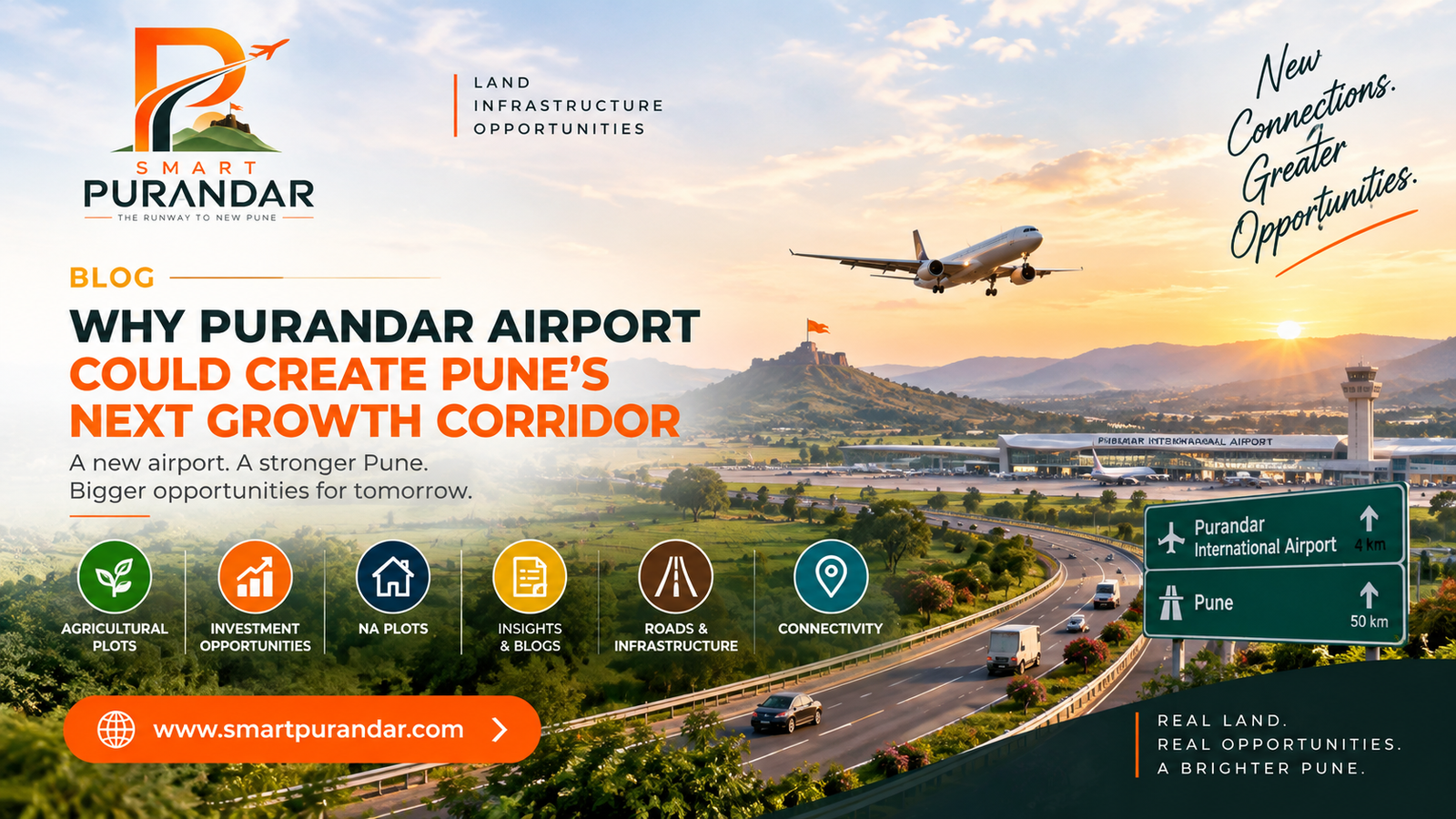
The proposed Purandar International Airport has the potential to become one of Maharashtra's most significant infrastructure projects.
The surrounding region is expected to benefit from improved road connectivity, future railway access, logistics-related development, and increased commercial activity.
As these projects progress, Purandar could emerge as a major growth corridor for South-East Pune.
What Smart Investors Should Look For
Instead of focusing only on the shortest distance to the airport, evaluate the overall development ecosystem.
Important factors include:
- Proximity to proposed Ring Road
- Access to major highways
- Railway connectivity
- Future logistics and industrial development
- Large contiguous land parcels
- Village-level infrastructure improvements
Infrastructure—not just proximity—often drives long-term appreciation.
Growth Happens in Phases
Every successful infrastructure corridor follows a similar pattern.
- Government announces major infrastructure.
- Roads and public utilities begin construction.
- Industrial and logistics investments follow.
- Employment opportunities increase.
- Residential and commercial demand grows.
- Land values appreciate over time.
Understanding this cycle helps investors make informed long-term decisions rather than chasing short-term market sentiment.
Final Thoughts
Purandar Airport represents much more than a new aviation facility.
It has the potential to reshape transportation, logistics, industry, and real estate across the surrounding region.
Whether you're considering agricultural land, farmhouse plots, or future residential investments, the real opportunity lies in understanding the infrastructure ecosystem that develops around the airport.
The airport may be the headline—but the growth corridor it creates could be the real investment story.
Want land in this zone?
Browse curated, clear-title plots across the Purandar corridor.
Explore Land ProjectsRelated insights
 Infrastructure
PMRDA Town Planning Scheme
If your land comes under a PMRDA Town Planning Scheme, you may not retain the same plot area, shape or location. Understand Original Plot, Final Plot, land deduction and development potential before investing.
Read insight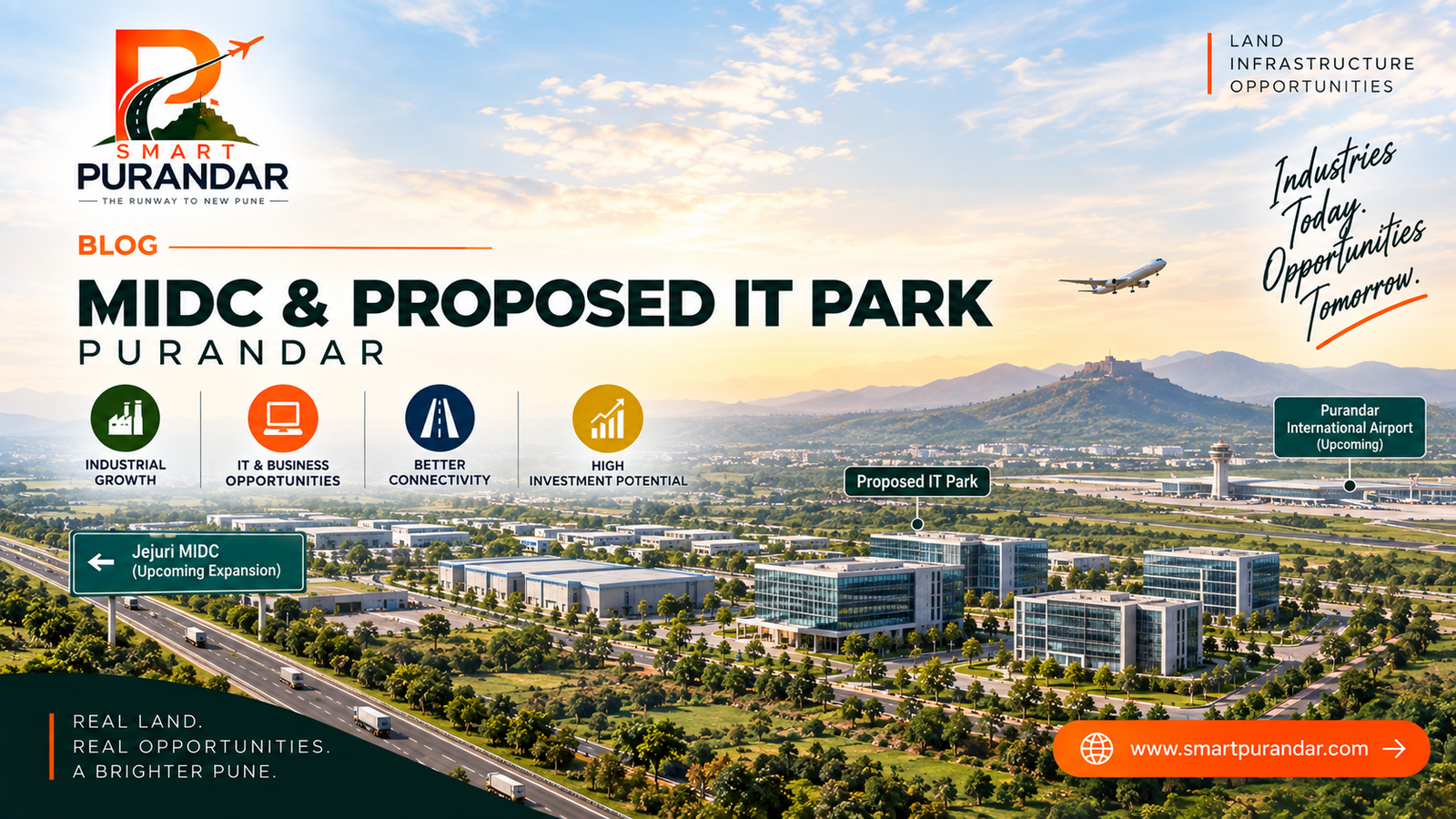 Infrastructure
Purandar IT Park
An official MIDC communication proposes the transfer of over 572 hectares of government grazing land across four villages in Purandar Taluka for the development of a proposed IT Park.
Read insight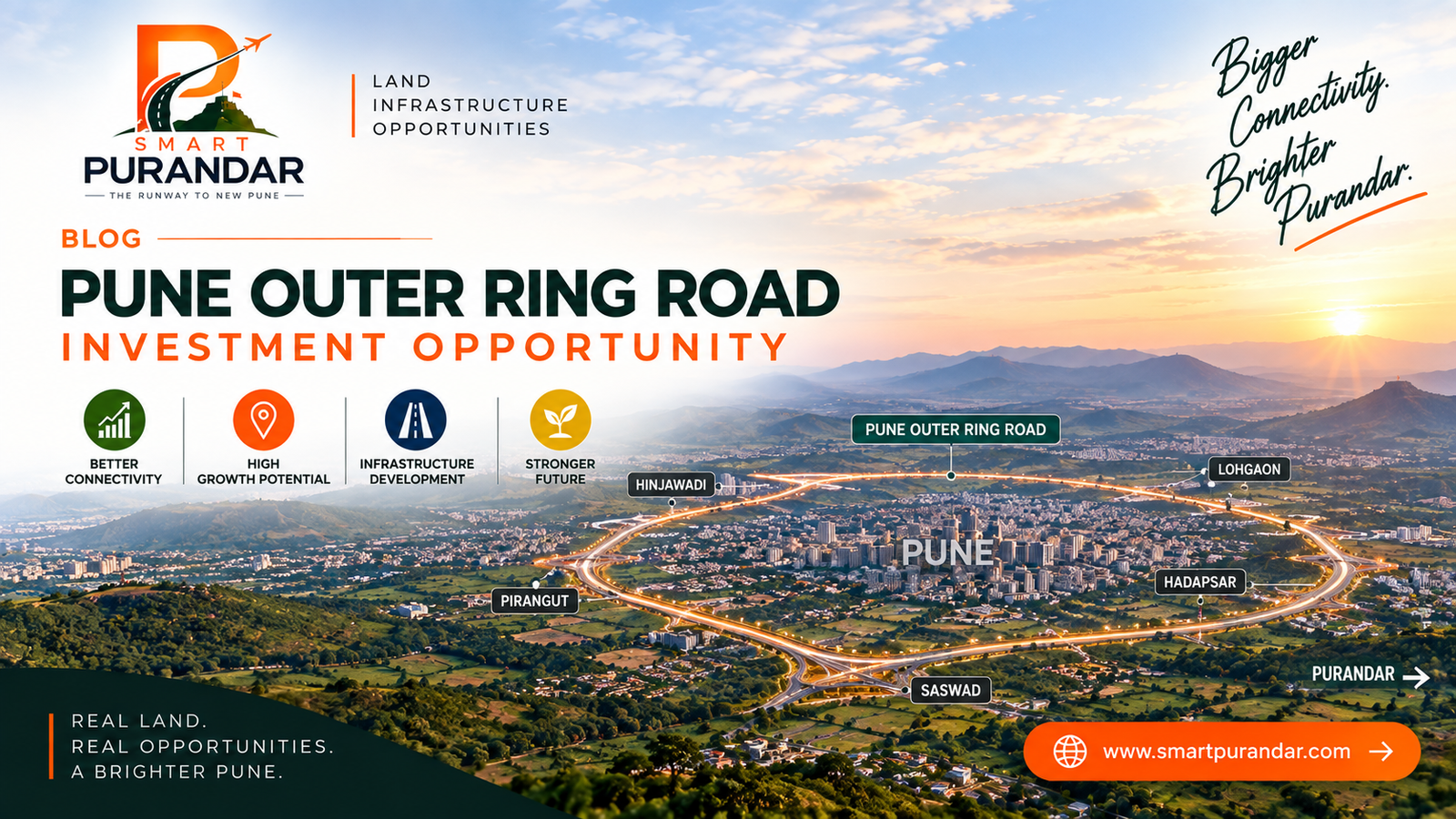 Infrastructure
Pune Outer Ring Road
The proposed Ring Road around Purandar isn’t just about reducing travel time—it’s expected to improve connectivity, unlock development, and create new investment opportunities across the region.
Read insight